Deprecated: version_compare(): Passing null to parameter #1 ($version1) of type string is deprecated in /dom146695/wp-content/plugins/gravityforms/includes/addon/class-gf-addon.php on line 5706

Deprecated: Return type of GF_Field::offsetExists($offset) should either be compatible with ArrayAccess::offsetExists(mixed $offset): bool, or the #[\ReturnTypeWillChange] attribute should be used to temporarily suppress the notice in /dom146695/wp-content/plugins/gravityforms/includes/fields/class-gf-field.php on line 84

Deprecated: Return type of GF_Field::offsetGet($offset) should either be compatible with ArrayAccess::offsetGet(mixed $offset): mixed, or the #[\ReturnTypeWillChange] attribute should be used to temporarily suppress the notice in /dom146695/wp-content/plugins/gravityforms/includes/fields/class-gf-field.php on line 90

Deprecated: Return type of GF_Field::offsetSet($offset, $data) should either be compatible with ArrayAccess::offsetSet(mixed $offset, mixed $value): void, or the #[\ReturnTypeWillChange] attribute should be used to temporarily suppress the notice in /dom146695/wp-content/plugins/gravityforms/includes/fields/class-gf-field.php on line 99

Deprecated: Return type of GF_Field::offsetUnset($offset) should either be compatible with ArrayAccess::offsetUnset(mixed $offset): void, or the #[\ReturnTypeWillChange] attribute should be used to temporarily suppress the notice in /dom146695/wp-content/plugins/gravityforms/includes/fields/class-gf-field.php on line 108
copywriting – Maria Polansky

Tag: copywriting

  • Features and benefits, and why they matter in fashion copywriting

    Features and benefits, and why they matter in fashion copywriting

    Have you ever heard the saying “people don’t buy products, they buy emotions”?

    There are other iterations, like “people don’t buy products, they buy results/stories/an identity/a better version of themselves”.

    However you want to spin it, the principle remains the same. Yes, people do buy physical products. But the reason they buy is emotionally-driven. They’re hoping the product will create specific results. A greater sense of confidence, joy, belonging, comfort … you get the picture. It’s not just about the product. It’s about what the product can do for them. How it can make their life better. And that’s where features and benefits come in.

    It’s one of the first principles of copywriting, and no matter how much the industry changes, I think it’s something that will always be relevant. I’m explaining why below, so let’s go!

    What are features in relation to copywriting?

    Simply put, a feature is something that a product has.

    For fashion and lifestyle products, features are things like materials and design details.

    For example, in this product description for an Everlane sweater, the features are:

    • Sustainable blend of recycled and virgin cashmere
    • Fit that sits closer to the body
    • Delicate trims
    • Smoother openings

    They’re matter of fact details that describe what the sweater is made of and how it fits. End of story.

    What are benefits in relation to copywriting?

    Benefits are where things get juicy.

    Features tell you what the product is. Benefits tell you why it matters. They tap into the human psychology of buying, drawing on the desired outcome. They let people know why and how the product will improve the buyer’s life. Let’s look at that Everlane product description again:

    The benefits here are:

    • Lightweight — feels comfortable to wear, doesn’t look bulky, and doesn’t take up a lot of space in a closet
    • Luxurious — makes the wearer feel elegant and refined, allows them to enjoy the finer things in life every time they put on the sweater
    • Easy — simplifies the getting dressed/styling process so the wearer saves time and feels more confident in their appearance
    • Timeless — it’s classic and will never go out of style, so the wearer won’t feel like their outfit is outdated
    • Soft — it’s cozy, comforting, and pleasant to wear, and those feelings increase with each wear

    These benefits point out that the sweater is more than just a sweater. It’s a source of comfort and confidence that saves precious time getting ready, styling, and shopping. Sounds like a smarter investment than just a sweater, right?

    Features & benefits: which is more important?

    Features and benefits are kind of like yin and yang. You can’t have one without the other — at least, if you want your copy to be effective.

    Most copywriters will say that benefits are more important because of the psychological element. Features might be what draw people in, but benefits are what make them buy. In that sense, benefits are very important.

    However, features are what give context to the benefits, so they’re important in their own way. As much as people want a positive outcome, they also want to know what they’re buying. It’s like the base ingredients of a dish and its accompanying seasonings. Sure, spices are what give a curry its rich flavour. But you need the vegetables and gravy to make the curry in the first place.

    Just like with spices and cooking, using features and benefits in copywriting is all about finding balance. Copy that’s too feature-heavy can feel bland, but you also want to use just the right amount of benefits to get the perfect outcome. And certain pieces of copy will require fewer benefits than others, depending on the nature of the copy and the product.

    Like with that product description. You may have noticed that I had to elaborate on the benefits because the product description didn’t really do it. But that’s ok, because product descriptions tend to be shorter, and they kind of have to focus on features because people want to know exactly what they’re buying. Also, the product is a bit more straightforward. Most of us know how great a cozy, lightweight sweater feels, so the benefits don’t need to be heavily emphasized in that particular piece of copy. They could be elaborated by creating an email marketing campaign, a blog post, or even a social media post that gives more space than just a few sentences. Context matters.

    Do you always have to mention benefits?

    As a copywriter, I’m going to give a big fat yes. Even if they’re subtle, like in a product description.

    I will acknowledge that sometimes features are enough on their own. Some people are loyal to certain design styles and fabrics/materials, so seeing those features might be enough to immediately sell someone. For example, someone who’s a sucker for linen won’t need much convincing when they see a linen shirt in their favourite colour.

    However, it’s still important to remember that a certain desire still lies at the core of that decision. The linen addict doesn’t just randomly love linen. They love it because it’s breathable, comfortable, and aligns with their personal style aesthetic. It’s taken them some time to reach that point of “if it’s linen, I’m sold”. Someone explained the benefits of the fabric to them at a prior stage, they got to experience them first-hand, and then they became a convert.

    That’s why it’s important to always include the benefits. You don’t know what stage of awareness and knowledge every customer is at*, and some might still be unaware of the benefits of your product. That benefit-driven copy might be what turns a browser into a buyer.

    *This applies to all forms of copy (web pages, product descriptions, blog posts, emails, social media posts), because you don’t know what stage of the discovery journey the reader is at. Just because your website’s homepage is filled with benefit-driven copy that really sells your products, that doesn’t mean you can slack off in other areas. Someone might be discovering your brand for the first time via social media or a blog post, so you need to make sure whatever copy they see first conveys the benefits.

    Common benefits in fashion & lifestyle copywriting

    Ok, so we know what features and benefits are, and why they’re important. Let’s talk about the most common benefits in the fashion and lifestyle industries.

    I mentioned above that buying typically comes from a place of desire. So when it comes to fashion copywriting, you can think about what we want our clothes and accessories to do for us.

    There are different core benefits based on the type of clothing/accessory that’s being highlighted:

    • Everyday wear/wardrobe staples — reliability, versatility, confidence. People want pieces they can grab without overthinking. That go with everything, hold up through busy days, and make them feel polished without trying too hard.
    • Loungewear/sleepwear — comfort, ease, and relaxation. Fabrics that feel buttery soft. Fits that feel like a hug. Clothes that let them truly unwind, because they feel so good in them.
    • Activewear/athleisure — performance, comfort, flexibility. Everyone needs a little extra motivation when they’re working out or running errands. They want clothes that make them feel more capable of their physical abilities, and that won’t annoy them while they’re at their most active.
    • Workwear/professional attire — confidence, authority, sharpness. Everyone wants to be respected and taken seriously at work. They want fuss-free clothes that create positive lasting impressions, and help them feel in control of their day.
    • Occasion wear/evening wear — glamour, confidence, fun. People want to feel like they’re the best dressed person at the event. They want pieces that feel more special than their everyday clothes, therefore making them feel more special.
    • Outerwear/cold weather clothing — warmth, comfort, protection. Even the people that say they’re not bothered by the cold want winter gear that delivers. They want to know that their cold weather clothing will shield them from cold-related discomfort.
    • Resort/holiday wear — ease, escape, relaxation. When people are on vacation, they don’t want to think too hard about their outfits. They want designs that feel good in the heat, are easy to style, and add to those carefree vacation vibes.

    So the next time you’re writing copy for a fashion product, don’t just focus on what it looks like or what it’s made of. A great design or premium material might not be enough. Emphasize how it’ll make the wearer feel. That’s where the gold is.

    Copywriting services

    Is your copy feeling a bit too feature-heavy? I can help you add in the juicy benefits that trigger emotions and convert.

    You can learn more about my copywriting services for fashion and lifestyle brands here, or drop me a line if you’d like to personally chat about what I can do for you.
  • Aspirational vs relatable fashion copywriting: how to find the right balance

    Aspirational vs relatable fashion copywriting: how to find the right balance

    As a fashion copywriter, I’ve long found that certain copywriting tips and best practices don’t fully apply to our industry. It’s one of the reasons I started this blog.

    Not sure what I mean?

    Most copywriting experts say the best copy is relatable. It really helps the reader imagine how the product or service being marketed would fit into their everyday lives, like Hinge being “the dating app designed to be deleted” or Oatly being for “vegans and non-vegans and for normally-not-vegan-but-sometimes-flexi-veggie-person-tarians”. Strategic words, phrases, and storytelling that the average person can truly relate to — bonus points for wit and humour.

    However, when it comes to fashion, jewelry, beauty, and even certain lifestyle products, things get a little complicated because there’s usually an aspirational element. How do you make your copy feel relatable when you’re also selling a dream?

    The big luxury fashion houses are the most guilty when it comes to aspirational copy. Brands like Hermès, Dior, and Gucci don’t want to be relatable. They want to be exclusive, promoting a jet set lifestyle filled with lavish parties, meals at Michelin starred restaurants with year long wait lists, and multimillion dollar residences. They’re not going to say their clothes and accessories work perfectly for casual coffee dates with your bestie, even if that’s exactly when you might be wearing them. It’s just not as sexy or interesting in the fashion world as a private yacht trip down the Amalfi Coast.

    And so a lot of smaller independent fashion brands follow suit with the luxury language. Especially if they’re also creating a high end product, like handcrafted solid gold/precious gemstone jewelry or handstitched leather handbags. If your designs are on par with the big names in terms of quality and craftsmanship, why wouldn’t you use them as inspiration?

    Here’s the thing. As beautiful as it reads, after a while that luxury language starts feeling repetitive. It’s all good and well to say your designs are exquisite and your brand is the pinnacle of everyday elegance, but if everyone else is saying the same thing, how will you stand out?

    This is the constant challenge I face as a fashion copywriter who wants to adhere to my clients’ visions of luxury and aspiration while making my writing feel different and interesting. And so I’ve decided to take a deep dive below, breaking down how to strike the perfect balance of aspirational and relatable in fashion copywriting.

    Why aspirational copywriting is important for fashion brands

    Don’t get me wrong, I’m still team aspirational fashion copywriting. Especially when it comes to higher end or luxury brands. You need to have that level of dreaminess and prestige to truly sell the luxury element of your brand, which is why you can’t go full casual/conversational (IMO).

    Fashion has always been about selling a dream or a specific lifestyle. It’s about the dress that makes your crush fall in love with you, the sunglasses that make you feel like a celebrity, the bag that makes you feel like your life is actually together, the boots that give you Nancy Sinatra levels of confidence … it’s only natural to want to hype up your fashion products and talk about how beautiful they are — and, in turn, how beautiful they’ll make the wearer feel.

    So yes, it is ok to use words and descriptors like radiant, dazzling, sophisticated, dreamy, refined, and/or sleek. I use them all the time for my clients. But it’s when you only use words like these that you might get in trouble. There’s building the dreamworld, then there’s turning it into a reality. That’s where relatability comes in.

    How to make fashion copywriting feel more relatable

    Ok, so you know how to make your brand and your products sound beautiful and luxurious through aspirational copy. Now you can use the relatability element to make it stand out. It’s a delicate balance, but when it works, it’ll be the key to making your copy stand out in a sea of luxury voices.

    Here are my favourite ways of making fashion copywriting more relatable:

    • Mention real life situations, occasions, and events. You know how I mentioned a coffee date with your bestie up above? Incorporate other elements of daily life like that into your copy. I especially love doing this for product descriptions and emails. Date nights with a romantic partner, errands, office days, brunches, beach strolls, nature walks … Saint Laurent and Chanel might not want to reference those ‘boring’ everyday occurrences, but they’re all things your customers can imagine because they’re a regular part of their lives. And you can still make them sound good when you’re blending them with aspirational copy. It’s essentially romanticizing the everyday, which the fashion crowd loves to do.
    • Use pop culture references. This is an excellent way to bridge the gap between aspirational and relatable. Maybe our lives can’t be as glamorous as Beyonce’s or Blair Waldorf’s, but we can always play pretend with a garment or accessory that channels their style.
    • Add a touch of humour. Fashion is meant to be about having fun, so don’t be afraid to use a bit of sass or humour! Brands like Reformation, Lush, Catbird, and Otherland offer perfect examples. And even some of the big guys are (kind of) doing it. Moschino has been known for its humour forever, and even Valentino and Louis Vuitton have been injecting more playfulness into their campaigns. Humour makes your copy feel more fun, and it’s also very memorable when done correctly.
    • Include conversational language. While it’s good to use some luxurious descriptors, you’ll also want to inject a bit of conversational language. I always like to imagine that friend that’s a little dangerous to go shopping with because they always get a bit too excited, if you know what I mean. Or, if you don’t have a friend like that, a really smooth sales associate. If you still don’t know what I mean, they’ll say things like “Isn’t this dress gorgeous? It would look so amazing on you. The colour works perfectly for your skin tone. And you could wear it for date night, or that concert you have coming up next month …” Essentially, you’re translating and refining those kinds of sentences until they sound like elegant fashion copy while still retaining the human feel.
    • Acknowledge common pain points. At the end of the day, your fashion product isn’t just there to look pretty — it’s there to solve a problem. Mentioning common fashion struggles like not knowing how to decipher a dress code, not being able to find a proper fit, or suffering because of an uncomfortable fabric will make the reader feel like you get them, because you’ve been in their shoes. This is an especially great practice for brands that create specialty products, like petite or plus-size brands, vegan brands, and occasion-specific brands.
    • Sprinkle in some styling tips. As fashion professionals, we often suffer from the curse of knowledge (assuming everyone else shares the same level of knowledge that we do). You might be able to think of 10 ways to style a pair of wide leg pants right off the bat, but the average person probably does not. There are so many people out there that might look at a garment and think it’s cute, but simultaneously feel that it won’t fit in with their wardrobe. However, if your copy includes a few different styling suggestions, they might realize that the garment might work for them after all since they now have a few different ideas of how to wear it.

    By keeping and incorporating these tips in mind, your fashion copy can feel elegant and luxurious while feeling relatable to the average person. Your brand will become appealing in every sense of the world — talk about a win-win situation!


    Copywriting for fashion & lifestyle brands

    Looking to find the perfect balance of aspirational and relatable within your fashion copy? I can help!

    Whether you’re launching a new collection or a new website, I have experience with website copy, product descriptions, email campaigns & other marketing materials.

    Learn more about my fashion & lifestyle copywriting services here, or drop me a line if you’d like to chat directly!

  • Marketing muses: copywriting inspiration from Duolingo

    Marketing muses: copywriting inspiration from Duolingo

    The best copy is always authentic and unique to your brand, but that doesn’t mean you can’t look elsewhere for inspiration. In this series, I’ll be sharing inspiration and insights from major brands* that are killing it with their copywriting. First up is everyone’s favourite language learning app, Duolingo!

    *Although I’m a fashion and lifestyle copywriter, sometimes it’s nice to look outside of these industries to see what other brands are up to. You can find a lot of inspiration when you switch things up and step away from what you know!

    Brand spotlight: Duolingo

    Is it safe to say that we all have a bit of a love/hate relationship with Duolingo?

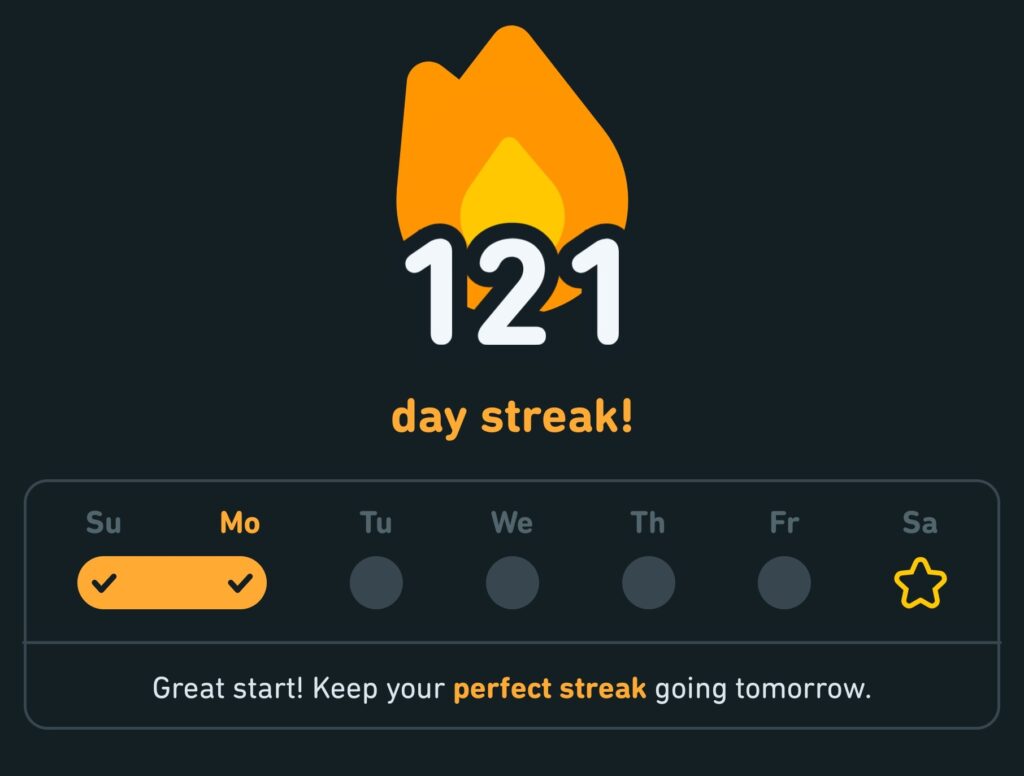
    I’ve been using it on and off for years, but I just hit a personal record breaking 47 day streak, which is partly what inspired me to create this post. That, and their marketing game has been fantastic lately.

    As a multilingual person and a former student, I have my qualms with some of Duolingo’s exercises. They can be repetitive to the point of being dull, and some of the phrases are downright nonsensical — I once went through a whole unit where I learned to talk about animals doing things that they are 1000% incapable of in real life. But hey, if I ever see a horse driving a car in a Spanish-speaking country, I’ll be able to describe it to onlookers.

    Anyway, curriculum aside, Duolingo’s marketing and copywriting techniques are on point. There’s a reason why it’s become the most popular language learning app, and a bit of a cultural phenomenon to boot. I’m sure we’ve all seen a Duolingo owl meme or two in recent years. Maybe you’ve even used it as a reference in your own everyday life?

    Either way, pretty much everyone knows about Duolingo. I’m sure it’s the go-to name for many of us when it comes to language learning. So, what exactly is it they’re doing right? Let’s break it down.

    Playing on human psychology & competitiveness

    We know one thing to be true with Duolingo: every user that has downloaded it came with the desire to learn a new language.

    However, if you’re someone that has started a new endeavour of any kind, you’ll know desire alone isn’t enough to maintain a commitment.

    I’ll admit, Duolingo wasn’t the best with this in the beginning. I’ve gone months without opening up the app in the past because I got disinterested with the content.

    But lately, they’ve been more clever with bringing people back. They’ve diversified their lessons by adding in exercises involving stories, mini podcasts, and interactive games. They’ve added in challenges, like bonus speed rounds — I’m not the most competitive person in the world, but even this challenge brought out my inner All Caps Abbi (IYKYK).

    Then there’s the almighty streak. I am feeling a great sense of accomplishment now that mine is at a record high. Duolingo has really honed in on the parts of human psychology that make us want to succeed lately, and as a result I’m more committed than I’ve ever been.

    If all of your content has been feeling too same-same lately, why not think of ways to diversify? Make it fun and interactive by doing a hunt-style product release campaign. Create quizzes that lead customers to their ideal designs. Share playlists. It’s not just about showing off your products. It’s about making people connect with them.

    Capturing attention in creative ways

    Remember when the Duolingo owl died at the beginning of the year? That was pretty great, at least from a marketing POV. Before you call me cruel or twisted, he didn’t actually die — he was being dramatic. Duolingo launched a campaign saying the owl was about to die from a lack of attention from all the users that haven’t been on the app for a while.

    It was funny and memorable, and it certainly created a buzz. Google has pages and pages worth of news and media sites covering it.

    On my own phone, I noticed the owl icon changing into funny graphics during my off periods. It looked a bit sick or weird, which definitely captured my attention. I wanted to know what was going on with the owl, and how I could get it back to normal. I realized that it was sick because of neglect (Tamagotchi/Neopets throwbacks, anyone?) and that the only way I could fix it was to restart my lessons. Now that I’m deep into my streak, Duo has once again transformed. Only this time, he looks like a razor-sharp spy on a mission. I look forward to seeing his next makeover!

    I realize this is more of a design tactic than a copywriting one, but the principle of creating something attention-grabbing remains. If I’d opened up my inbox to see a subject line like “Duo is on his deathbed, and only you can save him”, I’d pay attention.

    Using relatable examples

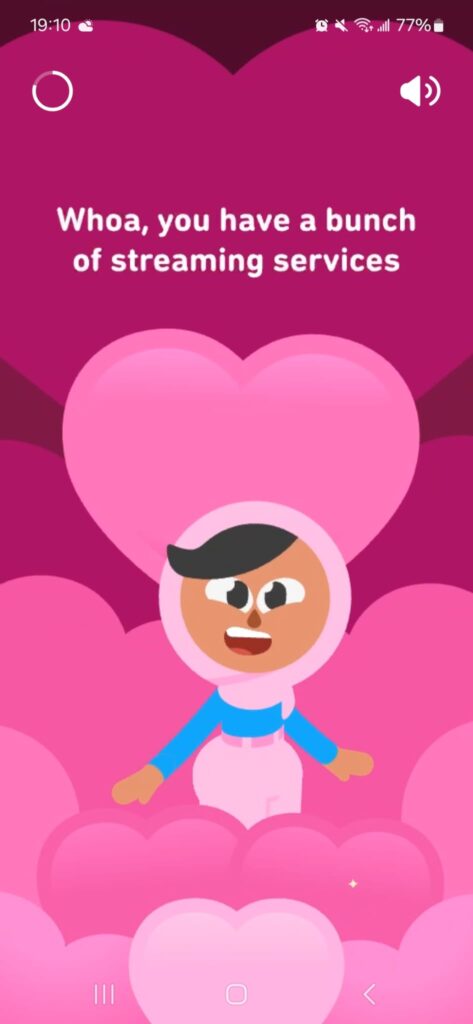
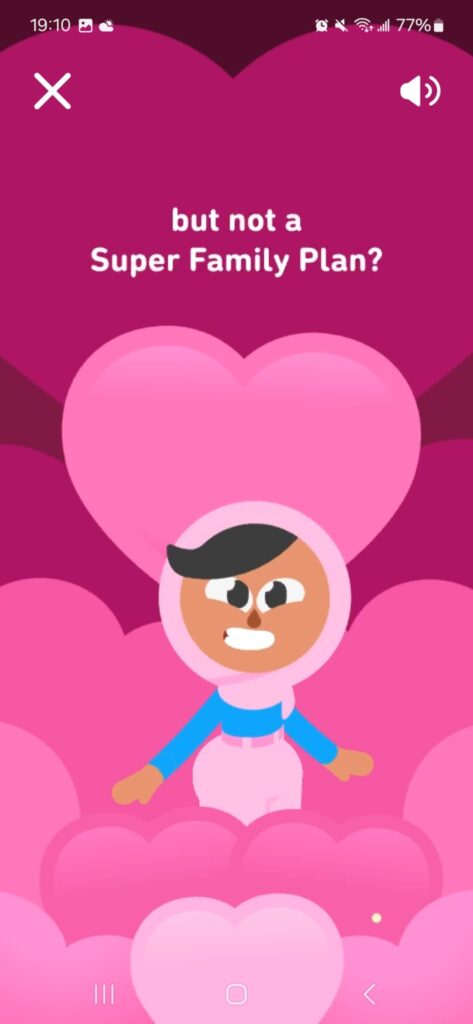
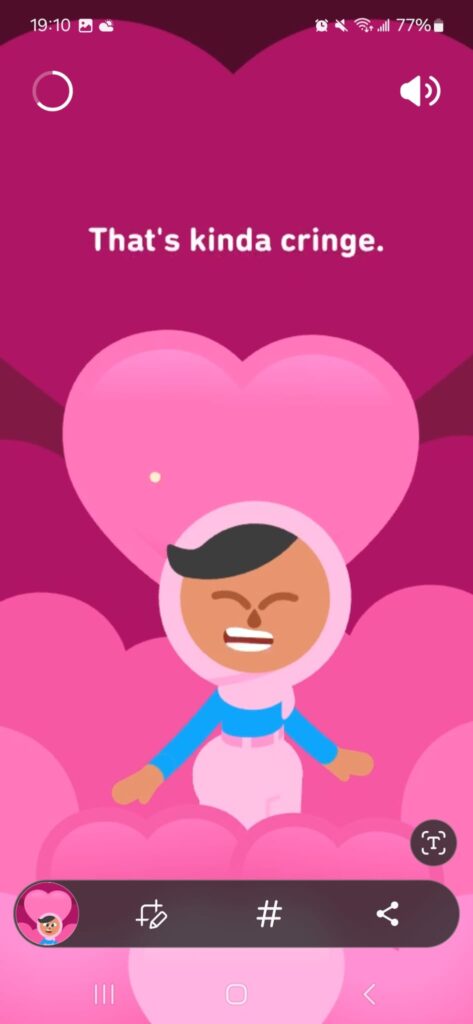
    Oof, when I saw this upsell ad, I knew I had to show my respect somehow! It’s much more relatable and effective than just saying “Our Super Family Plan is affordable” or “we offer the best price on our Super Family Plan”. Because it’s true that I maybe have one too many streaming services, so paying the equivalent price of one more or (probably the smarter solution) swapping one for a Duolingo premium plan wouldn’t break the bank. And it would be an investment that sharpens my brain — not sure I can say the same for a Netflix subscription.

    Showing real life comparisons that users can understand goes a long way. It can be a bit trickier in the more product-based fashion and lifestyle industries, but this tactic can be a great way to show off value in terms of longevity and quality. For example, “you can buy a gold-plated necklace that turns green in a few weeks, or you can invest in a solid gold one that’ll shine forever.”

    Having a playful brand voice

    Now, this certainly isn’t for everyone, but I think having this fun, playful brand voice works really well for Duolingo. Anything related to learning and academics can risk seeming boring, but Duolingo have avoided that with their cutesy, cartoon-like graphics, vibrant colour palette, and cheerful language.

    I believe that fashion and lifestyle brands can benefit a lot from a bit more fun. After all, these industries tend to be about creative expression and not taking life so seriously. You don’t need to go all out whimsical like Moschino — brands like Reformation, Duke & Dexter, Vitaly, and Mala candles are standing out with their subtle humour and casual tone.

    I see a lot of independent fashion and lifestyle brands think they have to have a luxury voice to sound good. You know, grand and poetic, à la Louis Vuitton or Hermès. I won’t lie, it sounds good, and I use versions of it a lot for my clients. But I find that the brands that sound more conversational and down to earth can end up being more memorable.

    Moral of the story: be clever, but have fun with your copywriting!

    Ok, I’ll acknowledge it again: it’s not just Duolingo’s copywriting that’s giving them success. It’s the branding, the design, the interface, and copywriting all coming together.

    But they’ve really been upping their marketing game by adding in humorous touches while playing on human psychology.

    Their copy is fun, relatable, and creative. Whether you’re a clothing, jewelry, or home décor brand, there’s a lot to learn from Duolingo!


    Copywriting for fashion & lifestyle brands

    Are you feeling like you need to up your copywriting game after comparing it to Duolingo?

    Whether you’re looking for a quick refresh or a full overhaul, I’ve got you. I can help you create memorable and engaging copy with my my fashion & lifestyle copywriting services, including website copy, email copy, and product descriptions.

    If you’re interested in working together, drop me a line to see what I can do for you!

  • Website copy 101: pages to add to your fashion or lifestyle brand’s website

    Website copy 101: pages to add to your fashion or lifestyle brand’s website

    They say your website is like your digital business card. A total reflection of your brand and ethos. And if you have a fashion or lifestyle brand, your website will also serve as your online storefront. Either way, it’s kind of a big deal.

    Potential customers will be heading to your website for a few reasons. To browse (and hopefully shop) your selection of products, of course … but also to learn about your brand. Especially if they’re serious about hitting that ‘add to cart’ button.

    While visuals and the overall aesthetic of your website are important, it’s the copy that’s going to instill the trust needed to actually get customers to convert. I mean, sure, repeat customers might be fine with basing their decisions purely on images and vibes, but anyone that’s not as familiar with your brand will want details. And lots of them.

    We all know that online shopping is a bit of a gamble, so it’s up to your website to reassure customers that your products are worth the risk. Whether your brand will have a primarily digital platform, you’re building an ecommerce shop to complement your physical storefront, or you feel like your existing fashion or lifestyle ecommerce website needs a little refresh, here are the pages you should definitely include on your website.

    Home page

    Well, this is kind of a non-negotiable. Every website needs at least one page, so it’ll be the home page.

    Your home page is the introduction page to your brand, so make sure it covers all the bases by explaining what your brand is about and what you do. You can also use it to highlight featured products and collections, but make sure you don’t skip out on step one. No matter how pretty your home page may look, it needs have depth to it as well so readers know exactly where they are and what they can expect from your brand.

    Your home page copy doesn’t have to be long, so think of it as the elevator pitch version of everything you’re trying to explain about your fashion or lifestyle business.

    About page

    Ah, the dreaded about page.

    Many business owners may feel nervous about this page, especially if they’re more introverted and don’t like talking about themselves. Besides, do you really need one if your home page explains what makes your brand special?

    Well, you don’t technically need one … but consider this:

    [Stats from Business Dasher]

    All in all, it makes your website seem more legit and trustworthy. And if you’re nervous about it? Remember that your about page doesn’t actually have to be about you as a person or a business owner.

    It should tell the story and mission of your brand while focusing on your customers. Or rather, what your brand can do for your customers. You can maintain a certain level of anonymity if that’s what you prefer – just be sure to keep your brand’s ethos and vision front and centre. So don’t think of it as an ‘about you’ page; think of it as an ‘about what we can do for you’ page.

    Materials/Ingredients

    A materials page is a huge bonus if you’re a fashion or jewelry brand. If you’re a beauty, skincare, or aromatherapy brand, call it an ingredients page.

    Your customers will want to know what your products are made out of for a variety of reasons. Maybe they have certain lifestyle preferences or sensitivities/allergies, or maybe they’re just curious. Either way, having a materials or ingredients page makes your brand appear more transparent and trustworthy.

    This is super important if you make any specific claims, like saying you’re a luxury or eco-friendly brand. You’ll always want to be able to back up those claims, otherwise you risk losing credibility.

    Even if you mention your materials or ingredients in other parts of your website copy, it’s nice to have a dedicated page so your customers can quickly find what they’re looking for. With that said, it doesn’t need to form part of your main menu. It can be a sub-page on your about page, for example, appearing on a drop down menu.

    Sustainability

    This isn’t a necessity if you’re not claiming to be a sustainable brand. But if you are, you’ll definitely want a dedicated sustainability page.

    It’s the same principle as having a materials/ingredients page. You’ll want a space where you can outline the exact ways you’re upholding your commitment to sustainability, unless you want to risk looking like a greenwasher.

    Use it to explain all the ways your brand is making a difference, from working with specific materials to production practices and charities you may partner with. Transparency is crucial when it comes to sustainability, so don’t hold back on sharing what you’re doing.

    Again, this can be part of an about section drop-down menu rather than an individual tab on a main menu, but you’ll definitely want it to be visible.

    Unique offers

    Does your brand provide any special services or offers? Maybe you’re a clothing brand that offers personal styling sessions, or a jewelry brand that offers customization services.

    Whatever unique offers your brand may provide, highlight them with a separate page. It’ll help your brand stand out, and it will be easier to find for those that are looking for specialized services.

    FAQ

    Is it worth having a FAQ if you have a bunch of pages that give an in-depth explanation of what your brand does?

    Yes. Yes it is.

    It’s good to have both comprehensive and scannable versions of necessary information to cater to both types of customers. And to satisfy the SEO gods, but that’s another story.

    But essentially, in today’s world attention spans are short, so some people will definitely be looking for quick and easy answers. A FAQ will help with that. It can also help to defer unnecessary customer inquiries, so that’s also a plus.

    Blog

    Well, I’m a bit biased here, but having a company blog is a great way to boost SEO and draw in organic traffic. It can also be a resource hub for your customers so they can receive ongoing value from you.

    I have a more detailed explanation for why having a blog for your fashion or lifestyle business is beneficial here, so I’ll keep this section brief. But let’s just say there’s a reason so many businesses still rely on blogging in their overall marketing strategy.

    Website copy for fashion & lifestyle brands

    Need help creating or updating the website copy for your fashion or lifestyle brand? Whether you’re starting from scratch or doing a refresh, I’m here to help with my website copywriting services.

    If you’re interested in working together, drop me a line to see what I can do for you!